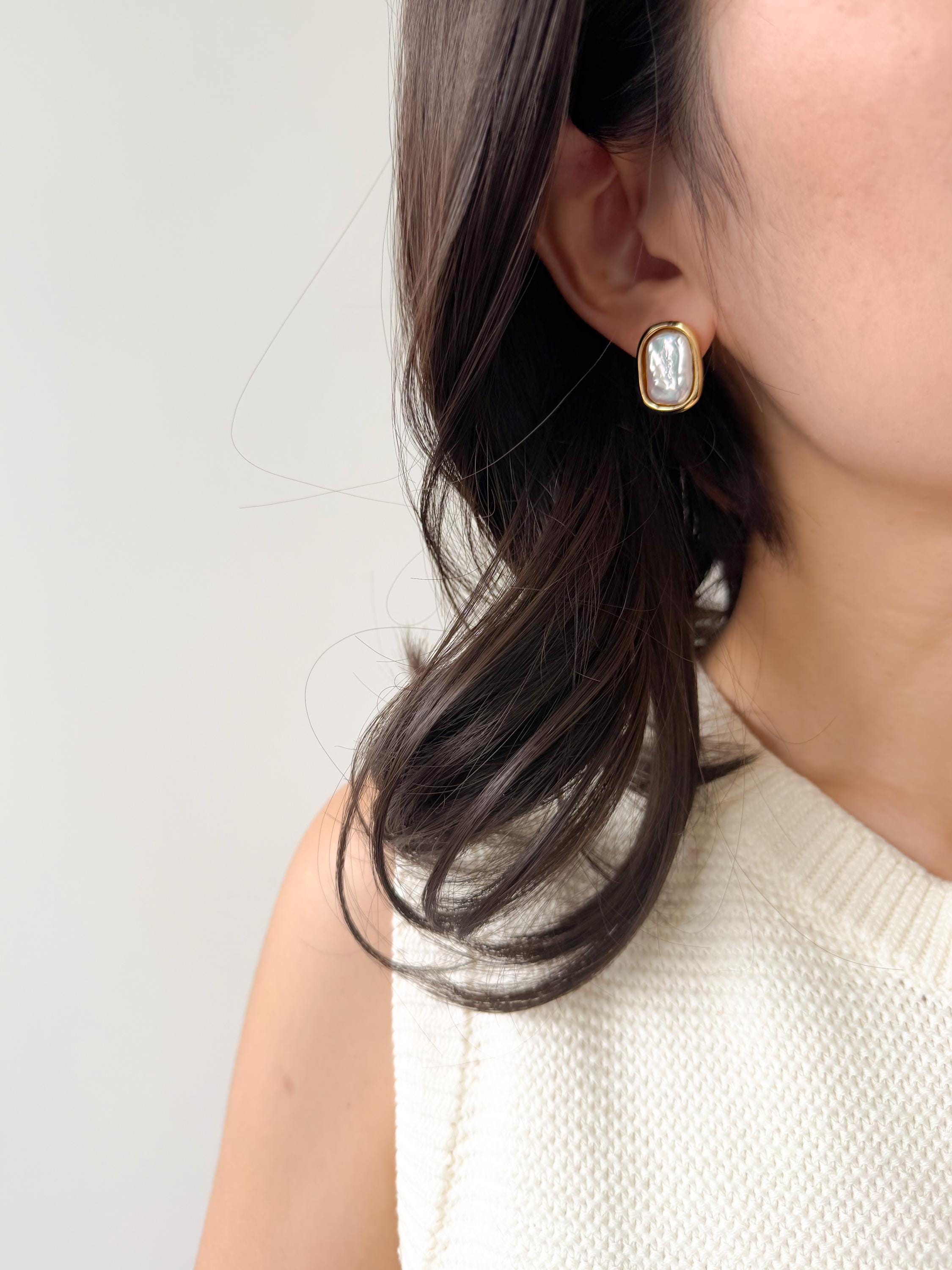
Keshi pearls are known for organic, often flattened or petal-like forms and strong visual texture. The word is widely used in the pearl trade, but shoppers should still look beyond the label and examine what is actually being offered.
Why the terminology deserves care
In gemological literature, Keshi commonly refers to non-bead cultured pearls that form as a by-product of pearl cultivation. Because industry usage can vary—and because shape alone cannot prove how a pearl formed—a flat or irregular pearl should not be judged solely by the word “Keshi.”
Technical reference: GIA Gems & Gemology discussion of Keshi cultured-pearl nomenclature.
What makes Keshi-style forms distinctive
Without a conventional spherical bead defining the outline, these cultured pearls can develop into thin, folded, elongated, or petal-like shapes. Their broad surfaces can create striking flashes of reflected light, making them especially suited to floral, sculptural, and asymmetrical jewelry.
Do not assume every flat pearl is high-quality Keshi
Ask for accurate pearl identification, close photographs, dimensions, and a clear description of the surface. The name of the shape or style cannot replace information about luster, condition, color, and construction.
What to look for
- Luster across the face: Broad, flat surfaces should show lively reflections rather than appearing dull.
- Edges and drilling: Check that thin edges and drill points appear sound and are incorporated securely into the design.
- Surface character: Ridges and growth marks may be part of the pearl’s beauty, but significant cracks or peeling deserve caution.
- Truthful terminology: A seller should clearly describe pearls as cultured or imitation rather than relying on vague labels.
- Thoughtful pairing: In earrings, the shapes can differ while still feeling balanced in scale, color, and luster.
The U.S. Federal Trade Commission advises sellers to distinguish cultured pearls from imitation pearls. That disclosure matters more than a romantic product name.
Consumer reference: FTC guidance on buying gemstones, diamonds, and pearls.
Keshi Pearls
Petal-like and sculptural cultured pearls chosen for their expressive forms.